
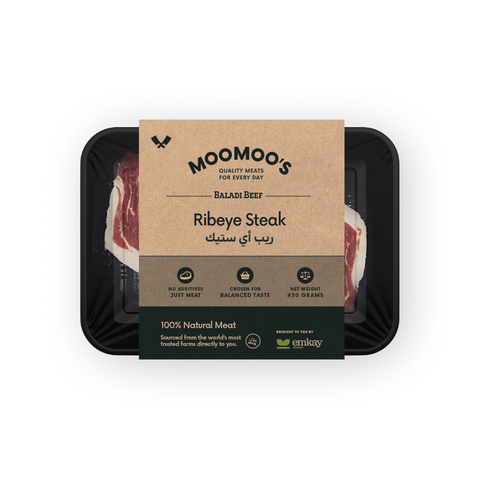
Ribeye Steak | Frozen Baladi Beef | Moomoo's | 450g
A ribeye from baladi beef, the local grain fed cattle most Egyptians grew up eating. Of the Moomoo's steak cuts it has the strongest beef flavour and enough fat in and around the eye to stay juicy at medium and medium well, which makes it the natural steak for a table that does not want pink in the middle.
The ribeye is cut from the rib section and is really two muscles: the eye, with marbling running through it, and the cap that wraps around the outside, which is the fattier and softer piece. Baladi beef here means locally produced, grain fed cattle of twelve months and over. The meat is a little firmer and more deeply flavoured than young beef, with marbling lighter than the Black Angus range but more than any other baladi steak. That fat renders as it cooks and bastes the meat from inside.
Baladi beef, locally produced and handled through our professionally managed cold chain, so it reaches you clean, sealed, and ready to cook.
Move it to the fridge the night before; a 450g pack thaws overnight, in about 12 hours. Never thaw it on the counter. For a faster thaw, keep the pack sealed and sit it in cold water for about an hour. Once thawed, cook within a day or two; do not refreeze raw. Leave the fat on: the strip around the edge renders in the pan and anyone who does not want it can cut it off at the table. Take it out of the fridge about an hour before you cook so it cooks more evenly, and dry the surface before searing.
Fat needs heat and time to render, so a ribeye eats better at medium than rare: around 60°C in the centre, when the marbling has softened and the cap is tender. At rare the fat stays waxy. It also takes medium well, about 65°C, more gracefully than any lean steak, which matters at an Egyptian table where well done is the usual order: the fat keeps it juicy where a fillet or rump turns dry. Fully well done it will be drier than at medium, but it survives; if you must go there, finish it slowly in a 135°C oven after the sear rather than in a hot pan.
Pan: heavy and very hot, a wipe of oil only. Sear two to three minutes a side, stand it on the fat edge for thirty seconds, then lower the heat and turn often until the thermometer reads three degrees under your target. A crushed garlic clove and a spoon of butter in the last minute, spooned over the top, is all the sauce it needs. Expect smoke.
On a charcoal mangal the dripping fat flares, so pile the coals to one side, sear over the hot side and finish over the cool side. Of the steak cuts it suits the mangal most, and it sits well beside kofta and kebab with baladi bread, tahina and salad.
If you did not thaw it in time, from frozen works for a thick ribeye: 90 seconds a side in a few millimetres of hot oil, then a 135°C oven for 18 to 22 minutes for medium rare, longer for medium. The frozen centre protects itself, so the grey band under the crust comes out thinner than on a thawed steak. Thin steaks do not suit this.
Rest three to five minutes, no more. Cut the cap off and share it; it is the piece people reach for first.
Suited for: a steak with real beef flavour that forgives medium and medium well, and the one to choose for a mixed table. The young beef ribeye steak is milder and a touch more tender; the baladi striploin steak is leaner with a firmer bite from the same animal; the Black Angus whole ribeye is the step up in marbling if you want to cut your own thick steaks for a crowd.
Ingredients: baladi beef.
Halal.
Pack: 450g, serves about 2.
Allergens: none (plain beef).